







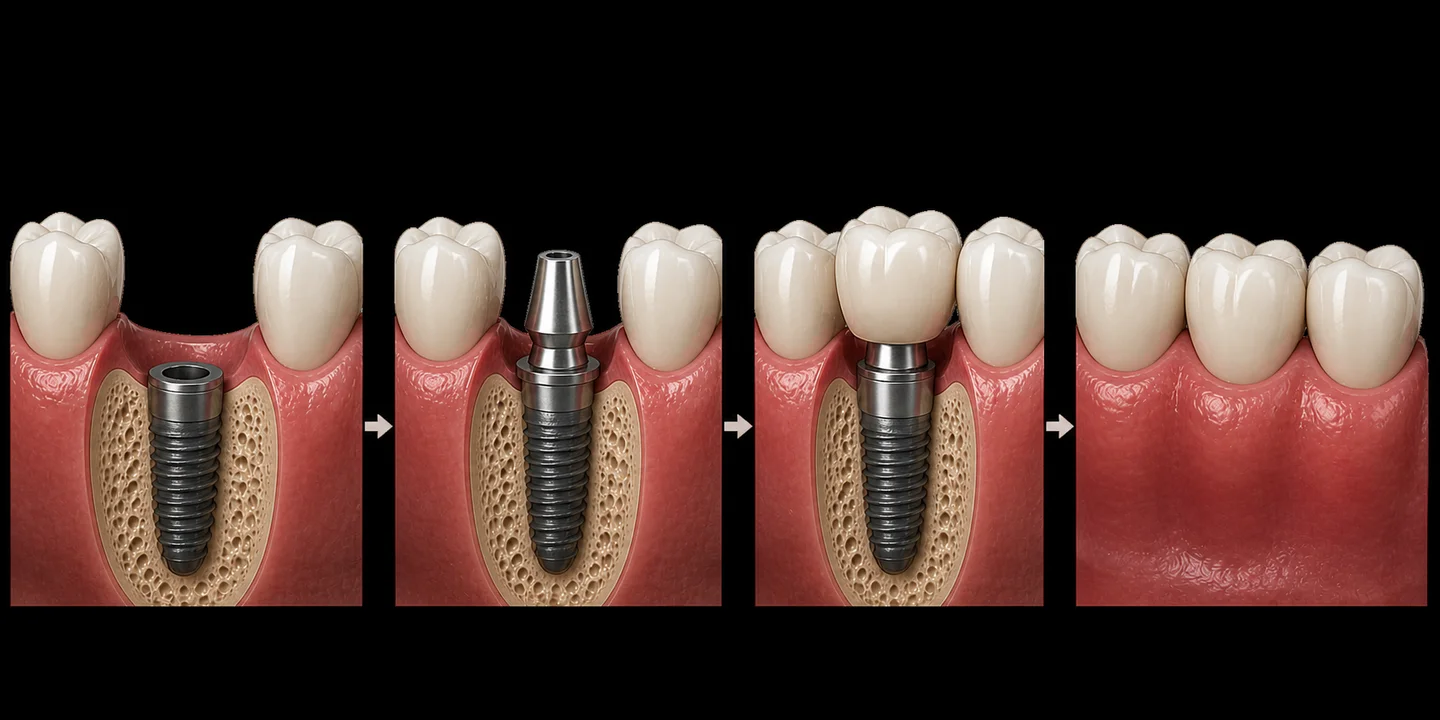
In our clinical practice at Dental Health in Tirana, we frequently meet patients who have lost most of their teeth, wear removable dentures, or have teeth with an unfavorable prognosis.
In these cases, full-arch implant-supported rehabilitation with All-on-4 or All-on-6 may provide a fixed solution aimed at restoring function, stability and aesthetics.
One principle is essential: there is no ideal number of implants for every patient. The decision between four and six implants should be based on diagnosis, not on a commercial package.
What is All-on-4?
All-on-4 describes a full-arch rehabilitation generally supported by four dental implants.
In selected cases, posterior implants may be placed at a specific angle to make better use of the available bone and respect important anatomical structures.
This approach may be considered for fully edentulous patients or when the remaining teeth cannot reasonably be maintained. Limited bone, however, does not automatically make a patient a candidate for All-on-4. The case must be assessed three-dimensionally.
The concept was first described by Maló and colleagues in 2003 and has since been documented in the international literature.
What about All-on-6?
With All-on-6, the full-arch restoration is supported by six implants. When anatomy and bone availability are favorable, the additional implants can increase the number of support points and allow a different distribution of functional loads.
Six implants are not automatically better than four. Implant number, position, angulation and stability, together with the design of the future prosthesis, must be considered as a whole. Biomechanical studies such as this finite element analysis have compared stress distribution between the two concepts.
How do I choose between All-on-4 and All-on-6?
Before deciding, I assess bone volume and quality, the position of the maxillary sinus and inferior alveolar nerve, periodontal condition, possible infections, remaining teeth, occlusion, prosthetic space, parafunctional habits and the patient's general health.
A panoramic X-ray can be useful for an initial remote assessment. For definitive planning of complex cases, we use 3D CBCT.
Diagnosis comes first. The number of implants comes afterwards. Prospective research has also compared crestal bone loss around straight and tilted implants in immediate-loaded All-on-4 and All-on-6 rehabilitations.
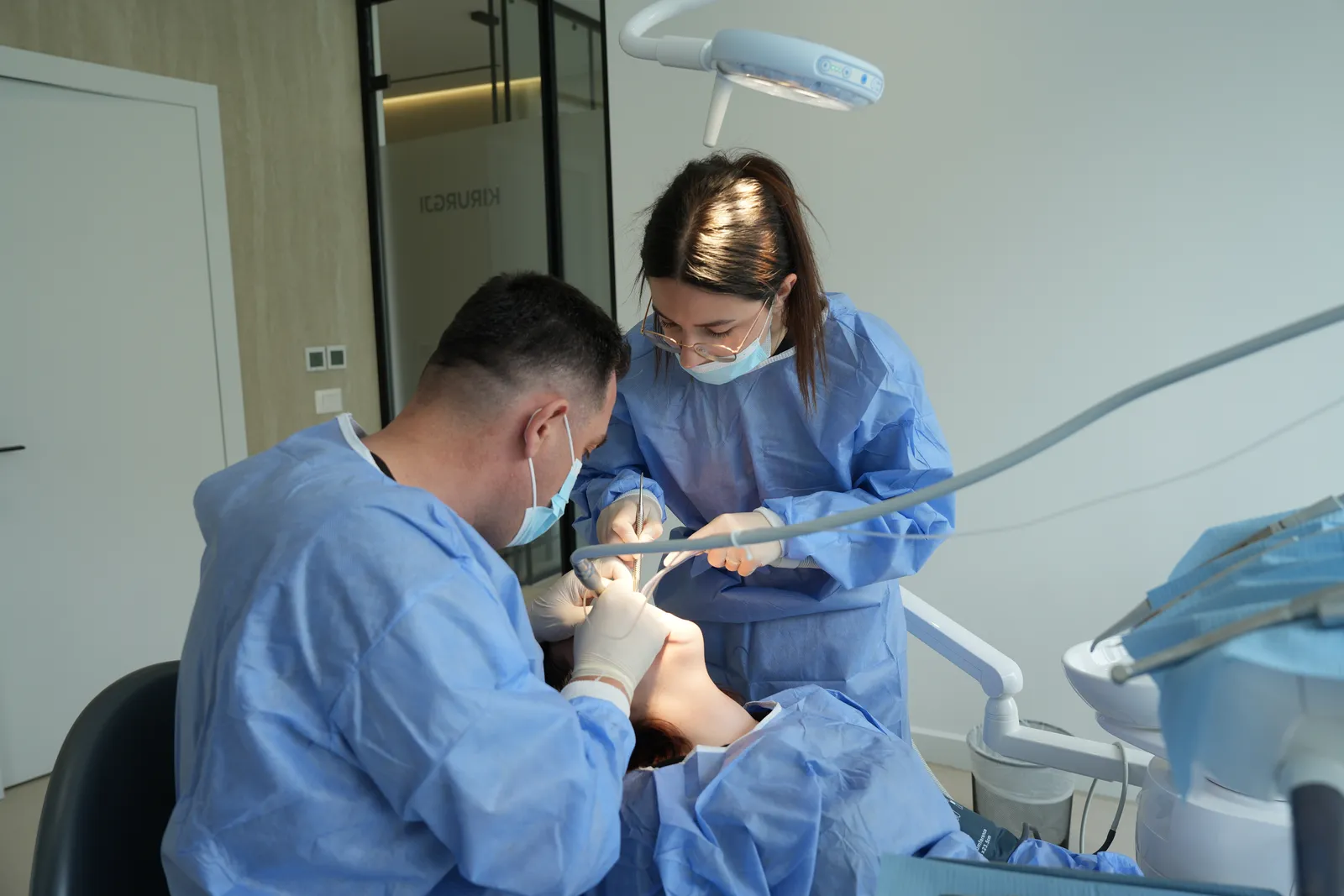
The surgical phase
Assessment of the remaining teeth
When severely compromised teeth are present, the first decision concerns their prognosis. I do not consider it appropriate to extract a tooth that can reasonably be saved simply to convert the case into a full-arch implant rehabilitation.
When the remaining teeth have a poor prognosis, extractions and, when conditions allow, implant placement may be planned during the same surgical phase. Selected cases may also require bone regeneration or sinus lift procedures.
Can fixed teeth be provided immediately?
In selected cases, immediate loading with a fixed provisional prosthesis may be possible. However, it should not be promised to every patient before surgery.
The decision depends on primary implant stability, bone quality, implant distribution and the ability to control functional loading. Immediate loading is a therapeutic option, not a commercial promise. Clinical studies with a 2-year follow-up support this approach in properly selected cases.
Osseointegration and the second phase
After surgery, healing and osseointegration begin. In our practice, the definitive prosthetic phase is generally planned after approximately 4-6 months, although timing varies according to the clinical situation.
Before the definitive restoration, we reassess the implants, soft tissues, occlusion and aesthetic parameters.
The prosthesis is as important as the implant
All-on-4 or All-on-6 should not be judged only by implant brand or implant number. A complete rehabilitation must also consider framework accuracy, prosthetic components, vertical dimension, occlusion, phonetics, aesthetics and the patient's ability to maintain proper hygiene.
At Dental Health we use intraoral scanning, digital planning and CAD/CAM technology to integrate the surgical and prosthetic phases, following principles such as those in the ITI Treatment Guides.
Which implant systems do we use?
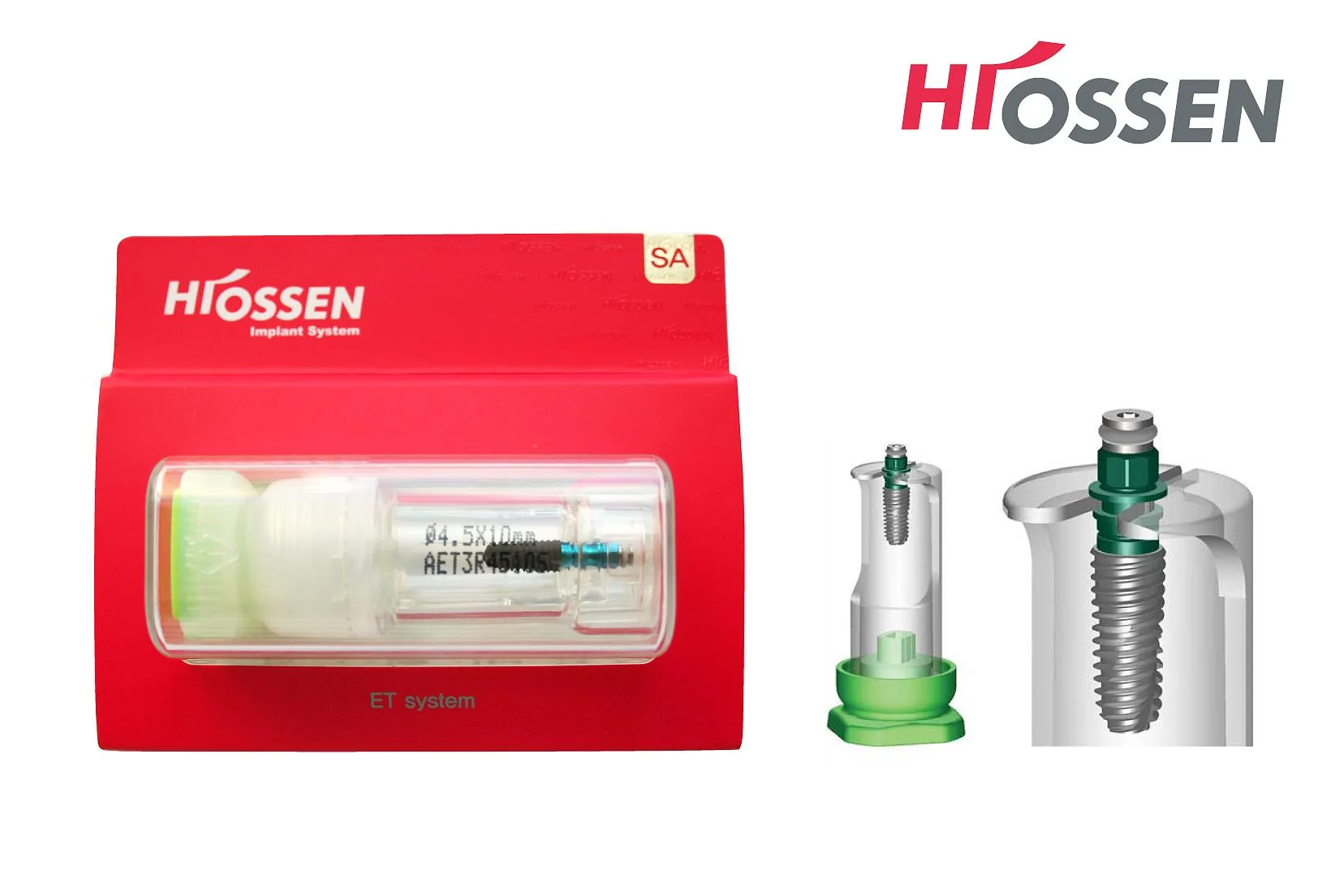
Implant brands
We work with different implant systems, including Straumann, Hiossen, Medigma and Alpha Bio.
The choice is not made simply according to price. We assess the system in relation to anatomy, bone quality, required components and the planned type of rehabilitation. Implant brand matters, but a good implant cannot replace correct diagnosis and planning.
Patients with limited bone
Not all bone atrophy is the same. In some patients, the remaining bone can be used strategically; in others, bone regeneration, sinus lift or other implant strategies may be required.
3D CBCT is essential to determine which solution is genuinely indicated.
What about patients with periodontitis?
A history of periodontitis does not automatically exclude implant treatment. Inflammation must be controlled, oral hygiene optimized and regular maintenance scheduled.
Implants are not immune to inflammatory disease, so long-term maintenance remains important after treatment is completed. You can see a documented example in our clinical case of full-arch rehabilitation after peri-implantitis.
How much does All-on-4 or All-on-6 cost in Albania?
I understand why cost is one of the first questions asked by patients considering dental treatment in Albania. From a medical perspective, however, I prefer to establish the diagnosis first and prepare the quotation afterwards.
Two patients asking for All-on-6 may have completely different clinical conditions. For this reason, we prepare an individualized treatment plan and quotation after reviewing the patient's radiographic documentation. Price ranges and what our All-on-4 and All-on-6 packages include are listed on our dental tourism page.
My advice to patients
When comparing quotations for All-on-4 or All-on-6, do not look only at the number of implants or the final price. Ask why that solution was selected, what the bone condition is, which implant system will be used, how the prosthesis will be made and how follow-up will be organized.
If you are also weighing cost against safety, our guide Is dental tourism in Albania safe? covers that side of the decision.
In our clinical philosophy, treatment always starts with diagnosis.
Request an assessment
Patients can send us a panoramic X-ray or, when available, a CBCT scan. After reviewing the documentation, we can explain which solution we consider most appropriate and prepare a personalized treatment plan.
Contact us to request an initial assessment of your case.
Dr. Shukri Jahiu, Dental Health, Tirana